
NATURE'S OWN LOGIC
 Colour - Lichens in Dalmatia by Niek Biegman paper
Nature operates through its own logic - what we perceive as imperfection is simply our limited understanding of a complete system. No two branches grow identically not because nature fails, but because it follows principles beyond uniformity.
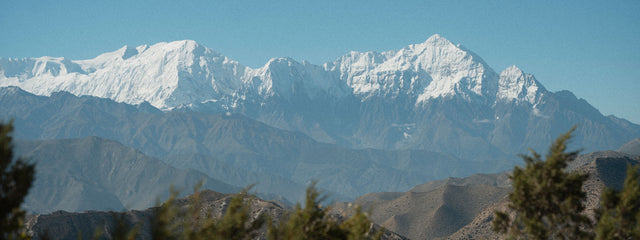
This thinking shapes how we approach design. Himalayan wool carries subtle tint variations depending on animal, season, altitude. Hand-dyed yarn shifts in color across the same batch. Asymmetric forms mirror how organic growth refuses perfect symmetry. These aren't flaws, they're evidence of process, of material responding to conditions. We work with what emerges naturally, and what might be interpreted as imperfection, we experience as alive, fresh, vibrant.

Perfect objects are static. The eye reads them instantly, completely, then moves on. Small variations create visual dynamism, how light catches different pile heights, how undyed wool shifts from cream to brown, how skilled weavers' hands create subtle differences across the surface that keep the eye discovering.
A slight color shift where dye batches met. Natural fiber that remembers the mountain it came from. These traces don't diminish the object, they authenticate it. Mass production eliminates variation to achieve efficiency. We do the opposite, seeking what can't be replicated because uniformity removes evidence of origin.
What if perfect sameness is the actual deviation from nature's standard? What if variation is the original logic we've been trained to see as flaw?


